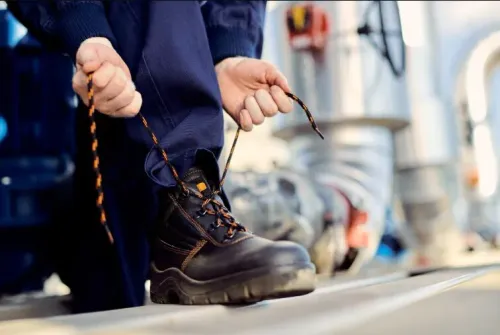
Wet-process floors, boat decks, ports and offshore work do not create the same footwear requirement. Compare suppliers by the exposure your workers face, then verify waterproofing, wet-grip performance, protective ratings, fit and replacement availability before placing a bulk order.
Key takeaways
- Specify immersion time, contaminants, toe risk and electrical hazards first.
- Do not confuse water-resistant uppers with waterproof footwear.
- Match the outsole compound and tread to wet floors and contaminants.
- Request standard markings, samples and a fit trial before bulk orders.
Start with the worksite, not the label
Wet processing, a dock, an engine room and flood-response work do not need the same shoe. Treat water and marine safety footwear as a buying brief, not a recognised performance class: specify the surface, immersion time, contaminants, toe-impact risk, electrical hazard and whether work happens aboard a vessel or ashore.
| Job | Match the footwear to the worksite | Do not assume |
|---|---|---|
| Wet factory floor | Waterproof or water-resistant safety footwear with a sealed lining, gusseted tongue and oil-resistant outsole | A water-repellent upper will stop prolonged soaking |
| Dock or marine deck | Deck-rated slip-resistant footwear with a non-marking, salt-tolerant outsole and corrosion-resistant hardware | A deep hiking tread will grip every wet deck |
| Engine room | Safety footwear combining toe protection, oil resistance and wet-surface slip performance | Electrical resistance is included automatically |
| Flood-response work | Waterproof boots with secure ankle support, drainage control and easy cleaning | A low shoe will protect against standing water |
For safety shoes water and marine safety in Pune, ask suppliers to classify the sample by application rather than calling every pair “marine.” Confirm the toe-cap requirement, membrane or sealed construction, drying time and contaminant exposure before comparing prices.
If electricity is present, request a separate electrical rating; water resistance does not make footwear suitable for high-voltage insulation.
Check whether the footwear is waterproof or only water-resistant
A shoe is waterproof only when the complete footwear keeps water out during the exposure you expect; a water-repellent upper is not proof. Ask for the exact model’s test documentation, not a catalogue claim or photograph.
Under EN ISO 20345:2021, WPA covers water penetration and absorption of the upper, while WR covers resistance of the complete footwear to water. WPA is not equivalent to a fully waterproof boot. Confirm that the report names the supplied model and states the tested exposure.
Before ordering water and marine safety footwear, ask the supplier these questions:
- Is the footwear intended for splash, prolonged rain, standing water or immersion?
- How long and how deeply was it tested?
- Does it use a waterproof membrane or sealed lining?
- Are seams sealed, and is the tongue gusseted up to the opening?
- Does water enter through the tongue, eyelets, collar or sole-to-upper bond?
- How quickly do the lining and insole dry after soaking?
- Does the warranty cover water entry, and for what period?
Inspect a sample after the expected exposure, including repeated flexing at the forefoot. For marine safety shoes, check that stitching, moulding, eyelets and hooks resist saltwater corrosion; a dry upper alone cannot protect wet feet when the gusset, seams or insole retain water.
Match the outsole to the deck, floor and contaminant
Choose the outsole from the contaminant, not from the phrase “non-slip.” Marine safety shoes that grip a clean wet deck can slide on diesel, hydraulic oil, fish residue, detergent, mud or algae. Ask for performance data on the surface your workers actually walk on.
Before comparing safety shoes in Pune, put these details into the purchase specification:
- Outsole compound: confirm resistance to oil, fuel, detergents and fish-processing residue; a general oil-resistant claim does not prove grip on every contaminant.
- Tread pattern: select closely spaced, self-cleaning channels for mud and algae, or a flatter contact pattern for smooth wet floors; deep lugs can trap debris and reduce contact on steel decks.
- Test surface: request results for wet ceramic tile with detergent or glycerol, wet steel, concrete and oily surfaces, not a single unspecified slip figure.
- Construction: inspect whether the rubber or polyurethane outsole is fully moulded or securely bonded to the upper, with no open edge where water and grit can lift the bond.
- Work setting: specify vessel deck, dock, engine room, wet-processing floor or flood site, because each combines different contaminants and traction demands.
Reject a supplier who supplies only “non-slip” wording without the test surface, contaminant and footwear model tested. You need evidence for the deck beneath your workers’ feet.
Read the standard markings before comparing quotations
A quotation for safety shoes in Pune is incomplete if it says only “ISI” or “steel toe.” Ask for the exact Indian Standard, product marking, BIS licence or conformity details, and test report. Water and marine safety footwear is not one performance class.
| Rating or marking | Confirms | What to verify |
|---|---|---|
| IS 15298 series; EN ISO 20345:2021 | Toe protection | The toe cap passed 200-joule impact and 15-kilonewton compression tests. “Steel toe” alone proves neither. |
| SR under EN ISO 20345:2021 | Additional slip resistance | The outsole passed the ceramic-tile-and-glycerol test. No SR marking means only the standard’s basic slip test was passed; it does not prove grip on oily steel or algae. |
| WPA or WR under EN ISO 20345:2021 | Water performance | WPA covers water penetration and absorption of the upper; WR covers the complete footwear after immersion. Neither marking means electrical protection. |
| A or C | Electrical behaviour | A means antistatic footwear; C means conductive footwear. Neither is high-voltage insulation. |
| Class 00 or 0 under EN 50321-1 | Electrical insulation | This is a separate class for live electrical work, with voltage limits stated by the manufacturer. |
Reject a quote that substitutes “waterproof,” “anti-slip,” or “electrical” for a named test standard and marking. A compliance certificate must identify the exact model and size range.
Test fit, corrosion resistance and construction before a bulk order
Reject a sample pair if water reaches the lining, the heel lifts, or the toe cap crowds your toes after a short trial. A catalogue photograph cannot reveal these failures.
1. Wear the intended work socks and walk, climb stairs and crouch for 20 minutes. Check toe clearance, instep pressure, heel movement and ankle stability. An over-tight waterproof boot restricts circulation; a loose one slips on a wet deck.
2. Inspect the outsole-to-upper bond around the toe, sides and heel. Look for continuous stitching or moulding, sealed seams, a firmly attached gusseted tongue and a collar that prevents water entry at the intended coverage height.
3. Flex the pair repeatedly and examine creases for cracking, open stitching or membrane separation. Pour water over the upper and collar, then inspect the insole and lining after drying; trapped moisture creates odour, softens materials and lengthens drying time.
4. Check eyelets, hooks, rivets and toe-cap edges for exposed metal, rust staining or dissimilar-metal contact. Saltwater accelerates corrosion, so ask for material details and the test report rather than accepting “marine” on the label.
5. Measure several sample sizes and record the sock thickness, foot length and width. Confirm that replacement pairs use the same last and construction before placing a fleet order.
Give these records to a safety footwear supplier in Pune and request batch traceability, warranty terms and replacement-stock confirmation for the marine safety shoes. Never treat water resistance as electrical insulation.
Where to compare Pune suppliers for repeatable marine footwear supply
A low sample price does not prove a reliable supply. For a safety footwear supplier in Pune, ask whether the proposed model is stocked for your application: wet processing, oil-contaminated floors, electrical work, or marine decks.
“Safety shoes in Pune” is a broad search; “safety shoes water and marine safety in Pune” must produce an application-specific specification.
Ask each supplier for the same evidence:
- Two or more sample sizes, including the smallest and largest expected wearer sizes.
- A technical datasheet, conformity certificate or test report, exact IS 15298 or other claimed standard, product marking, licence details, and batch or country traceability.
- Written warranty, defect-replacement process, lead time, minimum order quantity, and available sizes for repeat orders.
- Confirmation of current and planned stock for the same model, sole, colour, and size range.
| Supplier check | Accept | Reject |
|---|---|---|
| Stock continuity | Written size-level availability and replenishment lead time | “Available” without quantities or timing |
| Documentation | Model-specific certificate, test report and batch details | Generic “ISI safety shoe” claim |
| Replacement handling | Defined exchange, defect and repeat-size process | Replacement decided case by case |
AI Sales Corporation can be included in the comparison only after it provides these same records and sample pairs; assess evidence, not catalogue wording. Keep one approved sample and record its size, construction and markings before placing a fleet order.
Related product
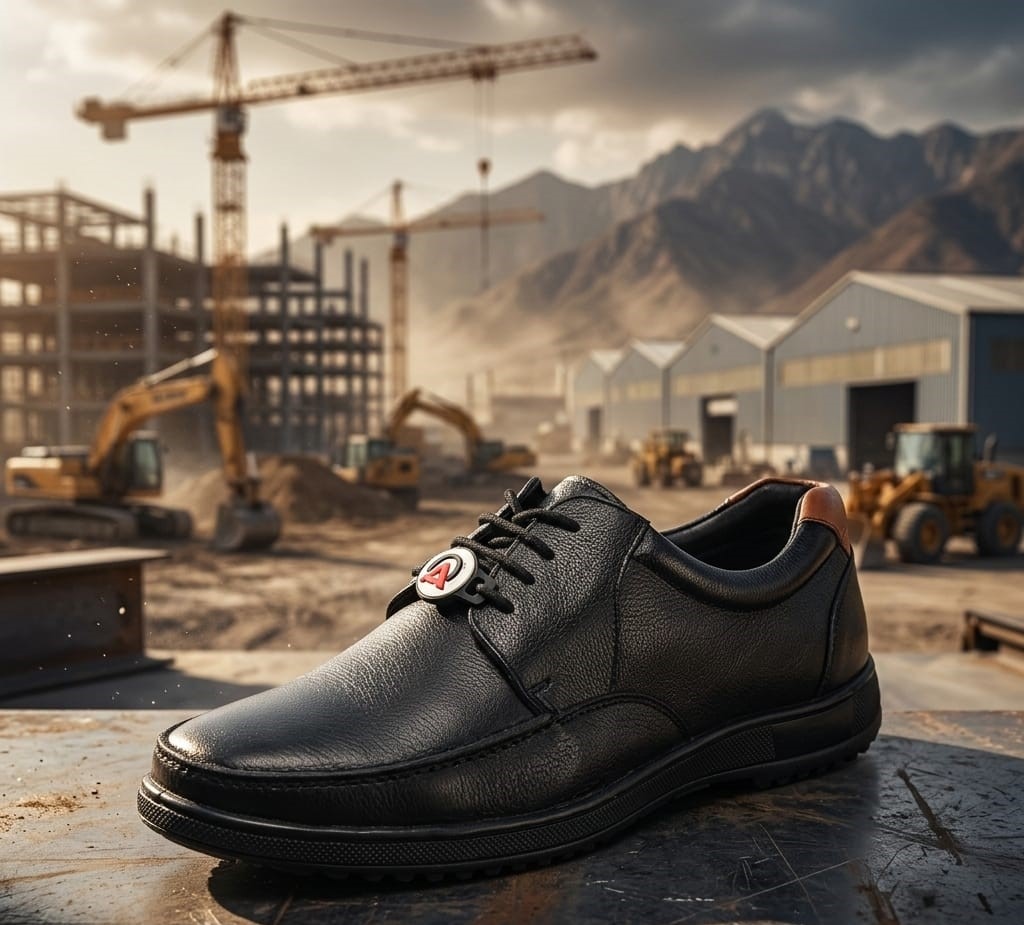 | Safety Shoes AI Sales Corporation offers a premium range of safety shoes designed to provide maximum protection, durability, and comfort across various industrial... View product → |
Frequently asked questions
How do you choose safety shoes for water and marine work?
Start with the worksite: identify the surface, immersion time, contaminants, toe-impact risk and electrical hazards. A dock, engine room and flood-response site need different footwear.
Are water-resistant safety shoes waterproof?
No. Water-resistant footwear slows water entry, while waterproof construction is designed to prevent penetration for a defined period. Ask suppliers for the tested water-penetration performance.
Which outsole is best for marine safety shoes?
Choose the outsole for the actual deck or floor and its contaminants. Compare slip-resistant tread, rubber or polyurethane compound, oil resistance and resistance to chemicals used on site.
What should you check before placing a bulk footwear order?
Read the standard and markings, inspect stitching and closures, test fit across sizes, check corrosion resistance, and trial samples on the working surface before ordering.