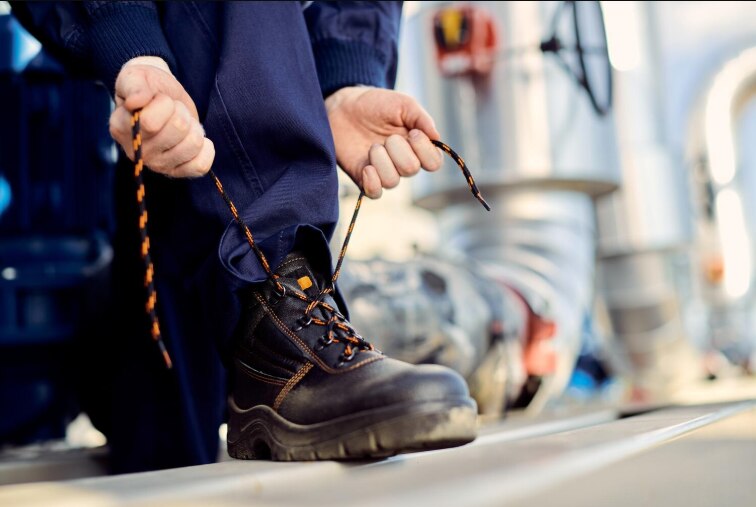
A shoe can reduce shock risk only when its electrical classification, test evidence and condition match the hazard. By the end, you will be able to distinguish shock protection from static control and arc-flash protection, check the markings and standards, and specify footwear that fits the work environment.
Key takeaways
- Match EH, dielectric, antistatic and conductive footwear to the actual electrical hazard.
- Check the shoe’s standard, test rating, model number and manufacturer documentation before buying.
- Replace footwear with cracked soles, exposed components, contamination or damaged uppers.
- Never treat safety shoes as permission to work on energised equipment.
How footwear changes the path of electrical current
Electrical shock occurs when your body completes a circuit between an energised conductor and ground. Footwear changes that path by adding electrical resistance between your feet and the floor, reducing current through your legs and torso. That protection works only while the sole and upper remain intact and the contact conditions match the footwear’s test.
That makes safety shoes for electrical safety problems useful against:
- Accidental contact with an energised conductor while standing on a dry, grounded surface
- Touch potential, where your body bridges an energised object and ground
- Step potential, where voltage differs between the two points beneath your feet during a ground fault
ASTM EH footwear provides secondary protection against accidental contact under dry conditions; it does not replace de-energisation, lockout/tagout, voltage verification or insulated tools. Dielectric footwear tested under EN 50321-1 serves a different insulating purpose and must match the specified voltage class.
Do not treat an antistatic or conductive shoe as shock protection. Those shoes deliberately provide a controlled path for static charge, while conductive footwear lowers resistance further. A steel or composite toe cap proves impact and compression protection, not electrical insulation.
Neither EH footwear nor an insulating sole provides arc-flash protection; arc-rated clothing, face protection, approach boundaries and an incident-energy assessment address that hazard.
EH, dielectric, antistatic and conductive footwear are not interchangeable
Choose footwear by the electrical hazard, not by the phrase “safety shoe.” A steel, composite or aluminium toe cap protects against impact and compression; it does not certify the sole’s electrical resistance or insulation. The toe-cap material cannot prove protection from an energised conductor.
| Option | Electrical purpose | Correct use | Do not assume |
|---|---|---|---|
| ASTM EH | Secondary protection against accidental contact with energised conductors in dry conditions | Dry workplaces where the employer specifies ASTM F2412 and ASTM F2413 EH footwear | It replaces de-energisation, lockout/tagout, voltage verification or arc-flash controls |
| Dielectric | Electrical insulation, tested under EN 50321-1 or the specified ASTM dielectric test, such as ASTM F1117 | Employer-defined electrical work requiring insulating footwear | It makes live work safe by itself |
| Antistatic or ESD | Controlled dissipation of static charge; EN ISO 20345:2021 specifies resistance above 100 kΩ and no more than 1 GΩ under its test conditions | Electronics production and static-sensitive areas | It protects against mains or industrial shock |
| Conductive | A low-resistance path that rapidly discharges static | Operations requiring conductive control | It is the opposite of shock-protective footwear |
Do not put “conductive,” “antistatic” and “electrically insulating” in one undifferentiated purchasing request. Their electrical objectives conflict. Electrical workplace footwear also provides no arc-flash rating; arc energy requires an incident-energy assessment, approach boundaries and arc-rated clothing and face and hand protection. Inspect the entire shoe, not just the toe cap.
How to verify a shoe’s electrical claim before buying
Reject any pair whose label says only “tested to 18 kV.” For safety shoes, electrical safety in Pune starts with matching the claim to the hazard, voltage, workplace conditions and required mechanical protection.
| Claim | Marking or standard | What to confirm |
|---|---|---|
| ASTM electrical hazard | ASTM F2412 and ASTM F2413, EH | Test method, duration, leakage-current limit and results for the complete finished shoe |
| Dielectric footwear | ASTM F1117 or EN 50321-1 | EN class 00: 500 V AC, 0: 1,000 V, 1: 7,500 V, 2: 17,000 V, 3: 26,500 V, 4: 36,000 V |
| Indian compliance | Applicable BIS specification, including IS 15298 Part 4 when specified | BIS licence scope or laboratory report covering that exact model |
| Antistatic, ESD or conductive | The stated antistatic, ESD or conductive marking | These control static differently from insulation and do not prove shock protection |
Ask the supplier for all of the following before ordering:
- Exact model, size range, batch or production identification and manufacturer’s instructions.
- A current test report or certificate naming the test standard, laboratory, test date and complete-shoe specimen.
- Care instructions, drying limits and written replacement restrictions after contamination, damage or failed testing.
- Separate results for toe impact, compression, puncture resistance, slip, oil, chemical and heat resistance.
A BIS or laboratory document for one model does not cover every colour, sole compound or size automatically. Check the report’s scope. Monsoon wetness, waterlogged floors, oils, chemicals or conductive dust require written confirmation that dry-condition EH footwear remains suitable.
When moisture, damage or live work defeats footwear protection
Electrical footwear loses protective value when it is wet, contaminated, physically damaged, or used outside its rated conditions; it is the wrong control for planned contact with energized parts or arc-flash exposure. Water or conductive contamination can bridge the sole, while a worn sole, puncture, embedded metal, or damaged upper can bypass insulation.
EH protection assumes a dry, intact shoe.
Take the footwear out of service when:
- The sole is worn through, split, or separating from the upper.
- A puncture, cut, crack, or embedded metal is visible.
- Oil, chemicals, metal dust, or other contamination remains after permitted cleaning.
- The manufacturer’s replacement or electrical re-test interval has expired.
For energized work, do not treat shoes as permission to remain live. De-energize the circuit, isolate it, apply lockout/tagout, and verify absence of voltage; if live work is authorised, follow the employer’s shock and arc-flash program. That program addresses approach boundaries, voltage-rated gloves and tools, arc-rated clothing, and face protection.
EH footwear provides no arc-flash rating.
Antistatic and conductive footwear also fail as shock controls because they deliberately discharge static through a low-resistance path. EN 50321-1 insulating footwear must match the circuit voltage class and work method, but it still supplements—not replaces—the employer’s electrical controls.
A practical buying specification for Pune workplaces
For industrial safety shoes in Pune, tell the supplier the electrical task, not merely “electrical safety shoe.” Specify contact voltage, AC or DC, work method, and exposure to touch or step potential.
Match electrically insulating footwear under EN 50321-1 to its class: 00 (500 V AC), 0 (1,000 V), 1 (7,500 V), 2 (17,000 V), 3 (26,500 V), or 4 (36,000 V).
- Describe the site: monsoon wetness, waterlogged floors, oils, chemicals, conductive dust, heat, and slip hazards. These conditions can make dry-condition footwear unsuitable.
- State the required mechanical features, including toe protection, penetration resistance, slip resistance, sole type, and chemical resistance.
- Reject antistatic, ESD, or conductive footwear as a substitute for shock protection. If the specification uses ASTM, request ASTM F2412 and ASTM F2413 EH markings, or ASTM F1117 dielectric footwear testing.
- Ask for the exact standard designation, finished-shoe test method, test duration, leakage-current limit, size-range marking, model, batch number, certificate or laboratory report, care instructions, and replacement limits.
- For Indian tenders, check the scope of the BIS licence or report, including IS 15298 Part 4 where specified.
- On delivery, compare every box and shoe with the approved model; quarantine pairs with missing markings, damaged soles, broken packaging, or mismatched batch details.
Give every bidder, including AI Sales Corporation, this same written specification so quotations compare equivalent protection rather than different claims.
Related product
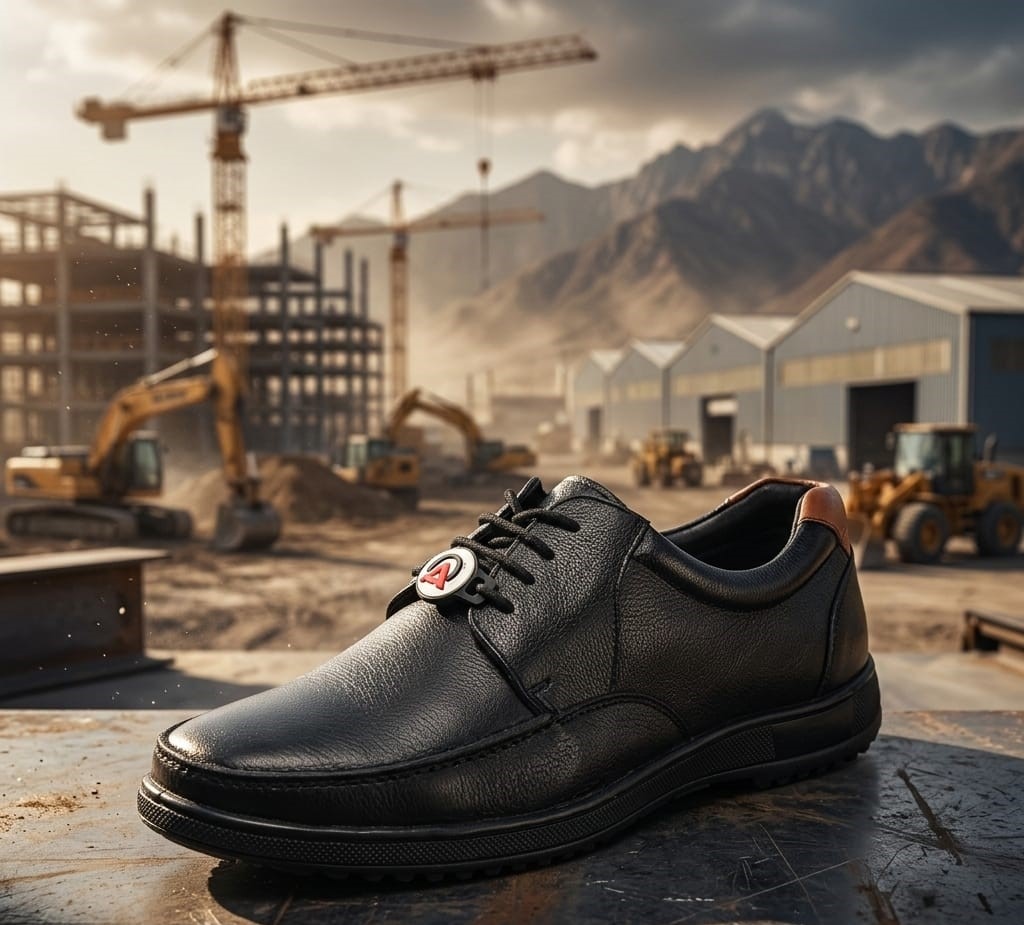 | Safety Shoes AI Sales Corporation offers a premium range of safety shoes designed to provide maximum protection, durability, and comfort across various industrial... View product → |
Frequently asked questions
How do safety shoes change the path of electrical current?
An intact sole and upper add resistance between your feet and the floor, reducing current through your body when contact conditions match the shoe’s test.
Are EH, dielectric, antistatic and conductive safety shoes interchangeable?
No. Each footwear type controls electrical charge or shock exposure differently, so choose the rating for the hazard identified in your risk assessment.
What should you verify before buying electrical safety footwear?
Check the electrical claim, applicable test standard, model identification, manufacturer information, size range and supporting test or conformity documents.
When can moisture or damage defeat footwear protection?
Wet floors, contaminated footwear, cracked soles, worn tread, punctures and damaged uppers can change current paths and invalidate the expected protection.
Keywords