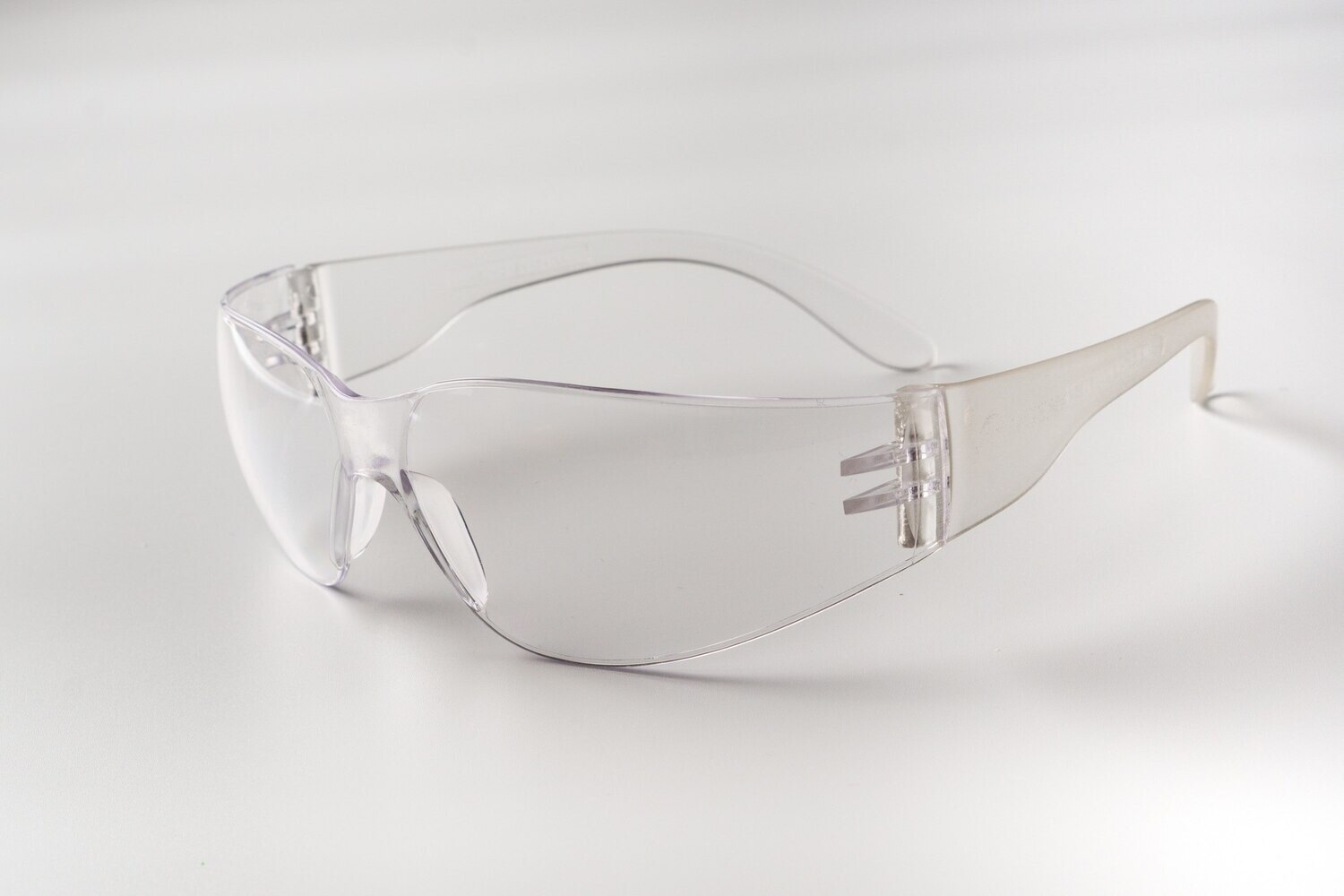
An anti-fog label does not make a spectacle electrically insulating or arc-flash rated. You will be able to decide when Honeywell A700 AF spectacles are suitable, which markings and documents to demand, and when to use sealed goggles or an arc-rated face shield instead.
Key takeaways
- AF indicates anti-fog treatment, not dielectric or arc-flash protection.
- Verify impact, side-protection and product documents before purchase.
- Keep spectacles clear with correct cleaning; replace damaged or degraded lenses.
- Check fit with helmets, respirators and arc-flash PPE before site use.
Is the Honeywell A700 AF suitable for your electrical hazard?
The Honeywell A700 AF is suitable only for routine eye protection when the actual exposure is flying debris and the supplied model carries the required impact and side-protection markings. AF means anti-fog treatment; it does not establish dielectric protection, voltage withstand, or an arc rating.
For monsoon eye protection for electrical work, match the spectacle to the hazard:
1. Flying particles: Use the A700 AF only after checking the lens and frame markings for the applicable impact class and side protection. Without those markings, do not rely on it for frontal or lateral debris.
2. Ultraviolet exposure: Confirm documented UV performance for the radiation source. A clear anti-fog lens is not automatically suitable for harmful ultraviolet light.
3. Molten-metal or chemical splash: Ordinary spectacles leave gaps around the eyes. Use protection specifically documented for molten-metal splash or chemical splash; sealed goggles may be the correct choice.
4. Arc flash: Do not treat the A700 AF as arc-flash PPE. Spectacles do not prevent electric shock and do not cover the face, neck or ears like an arc-rated face shield or hood.
A buyer specifying Honeywell safety spectacles for electrical safety in Pune should connect the eyewear to the task’s arc-flash assessment. For energized work, wear the specified arc-rated face-and-eye system over underlying eye protection; do not present the A700 AF as a complete protective system.
Which markings and documents should you verify before purchase?
For honeywell a700 af in pune, inspect the delivered spectacles, not just the marketplace photograph. Read the lens and frame markings under good light, then record the exact A700 variant or SKU, lens marking, frame marking, claimed standard, and batch or lot number where supplied.
Use this receiving checklist:
- Under ANSI/ISEA Z87.1, verify the applicable impact marking, such as Z87 for basic impact or Z87+ for high impact, and confirm side protection where a side-impact hazard exists. Do not assume open temples provide lateral protection.
- Under EN 166, record the manufacturer’s stated optical class, mechanical-strength code and field-of-use codes, such as 3 for liquid droplets, 4 for large dust, 5 for gas or fine dust, 8 for short-circuit electric arc, or 9 for molten metal and hot solids.
- If an Indian standard is claimed, request its full named standard and conformity document. Reject an unexplained “ISI” or “electrical safety” description.
- Request documentation stating the tint, anti-fog or other coating, impact class, UV performance, chemical or molten-metal protection, and any arc-flash claim.
| Check | Evidence to accept | Do not infer |
|---|---|---|
| Lens and frame | Legible permanent markings matching the documents | Protection from “A700 AF” alone |
| Regional SKU | Exact model, packaging and lot record | That every A700 version is identical |
Treat each regional SKU as a separate item. Lens tint, coating and packaging can differ, including for electrical safety spectacles in Pune.
How does Pune monsoon weather affect anti-fog performance?
A clear anti-fog lens still needs a complete wet-weather trial because anti-fog treatment does not eliminate condensation. Warm, humid air meeting a cooler lens can cloud the view, while helmet rims, respirators and rain hoods can direct exhaled air onto the eyewear.
Test the spectacles as monsoon eye protection for electrical work, not on their own. Use the actual helmet, face covering and rainwear, then repeat the trial:
- Walk, climb and bend as you would on site.
- Move from an air-conditioned room into humid outdoor air and back again.
- Check for fogging during exertion, upward airflow and sudden temperature changes.
- Confirm that rain does not pool on the lens or enter around the sides.
- Check clear vision while looking up, down and sideways.
Anti-fog spectacles are not sealed goggles. The treatment does not stop rain entry, wet-cement splash, chemical splash, high dust or debris entering through open sides.
Safety goggles for construction in Pune are the better solution for heavy water spray or liquid contamination, provided they also fit the helmet and respirator and remain usable without dangerous fogging.
Verify the exact SKU before issuing it: confirm whether it is clear or tinted, anti-scratch, and approved for low-light work. Do not infer those features from “A700 AF” alone; AF identifies anti-fog treatment, not every lens property.
How should spectacles fit with helmets, respirators and arc-flash PPE?
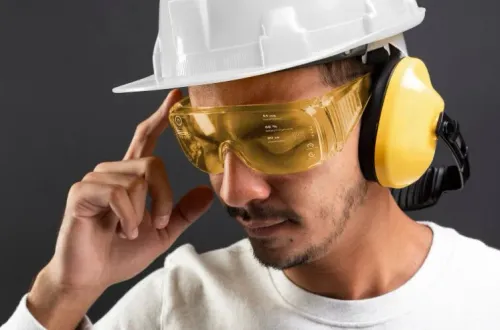
Approve the spectacles only after testing the complete PPE combination on the wearer. Check temple clearance beneath the hard hat or electrical helmet, nose-pad stability, side gaps, eye coverage and pressure points.
Use this movement test:
- Look up, bend, turn the head and walk briskly; reject any spectacle that shifts, exposes the eye or presses into the helmet.
- Repeat with the actual face shield, respirator, rain hood and prescription spectacles.
- Inspect the seal and breathing space after each addition; ask for exact model compatibility because dimensions and accessories are not universal.
| PPE option | What it covers | When it applies |
|---|---|---|
| A700 AF spectacles | Routine impact and visibility protection when the supplied SKU carries the required markings | Flying particles and ordinary electrical-site work |
| Sealed safety goggles | Eye enclosure against side-entry debris, wet cement, concrete splash and concentrated dust | Safety goggles for construction in Pune, after checking helmet and respirator fit |
| Arc-rated face shield or hood over underlying eye protection | Face protection specified by the arc-flash assessment | Energized work requiring arc-flash face protection |
A spectacle does not replace the specified arc-rated shield or hood, and it does not protect the face, neck or ears. AI Sales Corporation can help a Pune business compare the documented A700 SKU with sealed goggles and an arc-rated face-and-eye system, but the employer must approve the combination against its hazard assessment.
Specify electrical safety spectacles in Pune by the actual exposure, not by helmet compatibility alone.
Related product
 | Safety Goggles Honeywell A700-AF Safety Spectacles Premium Eye Protection by AI Sales Corporation, Pune Protect your eyes with the high-performance Honeywell A700-AF Safety Spectacles, designed for... View product → |
What inspection, cleaning and replacement routine works during the monsoon?
Before each shift, inspect the lens and frame in good light. Reject the spectacles for cracked lenses or frames, deep scratches, distorted vision, loose temples, damaged nose pads, or contamination that remains after proper cleaning.
- After rain or exposure to grit, mud, or cement dust, rinse the spectacles with clean water before wiping. This removes particles that could scratch the lens.
- Apply a lens-safe cleaner and wipe with a clean microfiber cloth. Air-dry the spectacles or pat them dry; never use abrasive paper, shirt fabric, or solvent.
- Do not scrub a dry lens. Trapped grit can create scratches, and repeated abrasive wiping can reduce anti-fog performance.
- Replace the lens if it stays cloudy, has deep scratches, shows cracking, or causes visual distortion. Replace it even when the impact marking remains legible.
Treat anti-fog coating as a consumable surface, not proof that the spectacles are suitable for heavy spray, chemical splash, or sealed protection. Keep a spare pair available when rain, cement dust, or frequent cleaning is expected.
For wholesale receiving, record the exact SKU, lens marking, frame marking, applicable standard, supplied documents, batch or lot information, and wearer fit. Issue lens-safe cleaner and microfiber cloths with a written rule stating when workers must remove spectacles from service and request replacement.
Frequently asked questions
Is the Honeywell A700 AF suitable for electrical hazards?
It suits routine eye protection from flying debris when the supplied model has the required impact and side-protection markings. AF does not prove dielectric protection, voltage withstand or arc rating.
Which Honeywell A700 AF markings and documents should you verify?
Check the lens and frame markings for the claimed impact and side protection, then request the product datasheet, conformity information, model identification and batch or traceability details.
How does Pune monsoon weather affect anti-fog performance?
High humidity, rain and temperature changes can overwhelm anti-fog treatment. Keep lenses clean, allow ventilation and replace spectacles when coating damage or persistent fogging obstructs vision.
How should the spectacles fit with other PPE?
Test the spectacles with your helmet, respirator and arc-flash PPE. Confirm that straps and seals do not dislodge them, create gaps or press the frame into your face.
When should you clean or replace the spectacles during monsoon work?
Rinse away grit, wash with mild soap, dry with a clean soft cloth and inspect each shift. Replace spectacles for cracked lenses, deep scratches, damaged frames or failed anti-fog performance.