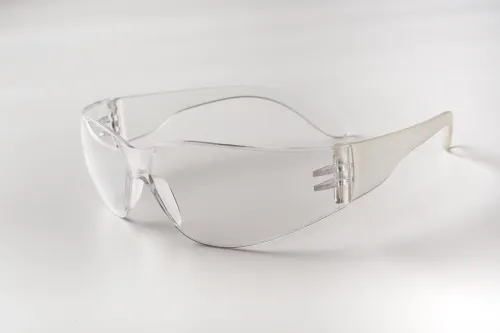
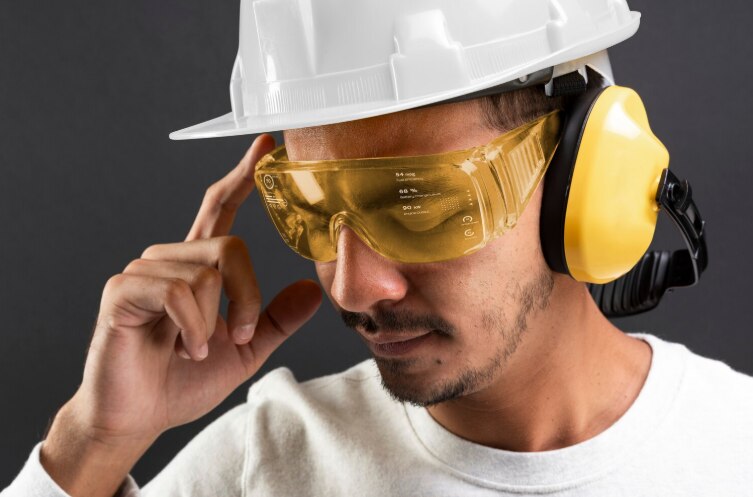
A waist belt, a work-positioning belt and a full-body fall-arrest harness control different risks, while protective spectacles address a separate class of eye hazards. By the end, you will be able to match each item to its task, verify standards and markings, and build a procurement checklist that works in Pune’s hot, humid and dusty workplaces.
Key takeaways
- Use a full-body harness for fall arrest, never a waist belt.
- Specify anchor, connector, clearance, rescue plan and inspection frequency.
- Confirm A700-AF lens and frame markings match the hazards you identified.
- Request samples, certificates, batch details and replacement terms before ordering.
Which safety belt or harness does the job require?
Select the equipment by the consequence of a slip, not by the label “safety belt.” A waist or body belt cannot arrest a fall: it concentrates stopping forces around the abdomen and may let the worker fall out or suffer severe injury.
Where a fall is possible, specify a full body harness that distributes arrest forces through the thighs, pelvis, chest and shoulders.
| Use | Equipment | When it applies |
|---|---|---|
| Restraint | Belt or harness with a restraint connection | Prevents the worker reaching an unprotected edge; it is not designed to stop a fall |
| Work positioning | EN 358 positioning belt, usually with a compatible harness and positioning lanyard | Supports a worker while using both hands, such as on a pole or structure; it is not a substitute for fall arrest |
| Fall arrest | EN 361 full body harness with compatible anchor, connector and energy absorber | Stops a fall; requires clearance below, control of swing fall and a rescue plan |
A procurement team should reject a waist belt for roof edges, scaffolding or elevated platforms unless the risk assessment proves the worker cannot reach the fall hazard and the manufacturer permits that use. Check the harness instructions, compatible anchorage and rescue arrangements before ordering.
For searches such as safety belt honeywell safety spectacles for benefits in pune, keep the decisions separate: fall equipment controls height exposure, while Honeywell safety spectacles address specified eye hazards. Neither product protects against the other hazard.
What must a fall-protection specification include?
Specify the complete fall-arrest system, not a generic “safety belt.” A waist belt cannot arrest a fall; use an EN 361 full-body harness where a worker could fall, and match its attachment points to the task.
1. Define the use: restraint prevents reaching an edge, work positioning uses an EN 358 belt with suitable supports, and fall arrest stops a fall. Do not approve a positioning belt for fall arrest.
2. Name every component: compatible anchor, connector, lanyard and EN 355 energy absorber. Check the manufacturer’s compatibility instructions; a connector that does not lock, or an anchor not rated for the system, can release under load.
3. Calculate clearance from the anchor to the lowest obstruction, including lanyard length, absorber deployment, harness stretch and worker height. Record the result. A short clearance distance can make an otherwise certified system ineffective.
4. Control swing-fall risk by placing the anchor above or close to the worker’s line of travel. Inspect for sharp edges, which can cut webbing or lanyards; specify edge-rated equipment where contact cannot be avoided.
5. Document suspension-trauma controls: rescue equipment, trained rescuers, communication, access route and a timed rescue procedure. Calling emergency services alone is not a rescue plan.
For buyers searching safety belt honeywell spectacles in pune, keep eye protection separate from fall protection. Require product instructions, conformity evidence, inspection intervals and rejection rules for damaged harnesses, connectors or absorbers.
What protection do Honeywell A700-AF spectacles actually provide?
A700-AF spectacles address frontal exposure to flying particles, ordinary workplace dust and ultraviolet radiation only when the exact lens marking supports that claim. Their impact protection depends on the marked classification, so do not assume every A700-AF variant offers the same rating.
The practical industrial safety spectacles benefits are protection during drilling, grinding, cutting and general handling—not protection from every eye hazard.
| Option | Protection and limitation | Use it when |
|---|---|---|
| Clear spectacles | Preserves visibility indoors; does not block all glare or specialist radiation | Indoor work, workshops and low-light areas |
| Tinted spectacles | Reduces outdoor glare; can obscure detail in shade | Bright outdoor work after checking the tint and UV marking |
| Sealed goggles | Closes the gap around the eyes and resists splash and high-volume dust entry | Chemical splash, liquid handling or dusty processes |
| Face shield | Covers the face against large fragments, splash and molten-spatter hazards; does not seal the eyes | Use with suitable spectacles or goggles for added coverage |
Anti-fog treatment helps during humidity, temperature changes and mask use, but AF is not a permanent no-fog guarantee. Abrasive wiping, damaged coating, unsuitable solvents or a poor fit can restore fogging.
For Honeywell A700-AF spectacles in Pune, match the lens to the task and inspect visibility in the actual work area. Do not substitute them for sealed goggles around hazardous liquid, molten material or dense dust, or for specialist welding and laser filters.
A fall-arrest belt does not protect the eyes, and spectacles do not control a fall.
How should buyers verify A700-AF markings, fit and field performance?
Do not approve “A700-AF” from a catalogue title alone. Match the spectacles in hand to the carton, lens marking and conformity documents for the exact supplied variant.
1. Record the lens tint, model code, applicable standard, optical class, impact marking and UV claim. For European-marked products, check the EN 166 marking and its mechanical-strength symbol; for US procurement, request evidence against ANSI/ISEA Z87.1. Do not treat these conformity routes as interchangeable.
2. Confirm that the documents identify anti-fog and anti-scratch treatment, not just “AF” in a sales description. AF is not a permanent promise: unsuitable solvents, abrasive wiping, humidity and temperature changes can damage performance.
3. Check prescription compatibility before ordering. Confirm whether the spectacles fit over the worker’s prescription glasses or require an approved prescription insert; do not assume both arrangements provide the intended seal, clearance or impact protection.
4. Run a sample-wear trial in Pune before bulk purchase. Test fogging during shift changes, dust exposure, scratching during cleaning, retention while bending and turning, and interference with helmets, respirators and hearing protection.
5. Reject the sample if it slides, pinches, leaves unsafe gaps, obstructs vision or is removed during work. Workplace eye protection in Pune succeeds only when the marked protection remains comfortable and worn for the full task.
What should a Pune procurement checklist and supplier request contain?
For a “safety belt honeywell spectacles in Pune” request, split the specification into fall protection and eye protection. Ask the supplier to identify whether the belt is a restraint, positioning or fall-arrest system, and match its documents to the applicable standard, such as EN 361, EN 358 or EN 355.
Do not treat a body belt as a full-body harness.
- Declaration of conformity naming the manufacturer, product model, applicable standard and exact Honeywell A700-AF variant.
- Current technical datasheets and user instructions, including limitations, fitting, cleaning, storage and inspection intervals.
- Test reports or certificates supporting the claimed protection, not a generic catalogue statement.
- Lot or batch number, manufacturing date, manufacturer identification and traceability from delivery records to the supplied units.
- For Honeywell A700-AF spectacles in Pune, lens tint, optical class, impact marking, UV claim, anti-scratch or anti-fog treatment, and packaging markings.
- Replacement policy covering lenses, complete units, harness components and end-of-life criteria.
- Inspection records for incoming goods, including stitching, buckles, labels, lens distortion, scratches and packaging damage.
- Written rejection criteria: reject missing documents, broken seals, unidentified lots, distorted or scratched lenses, chemically damaged coatings, damaged webbing or deformed hardware.
AI Sales Corporation can use this checklist when responding to a Pune sourcing request, without assuming that a particular harness or A700-AF configuration is stocked. Keep the approved variant and documents with the purchase order.
Related products
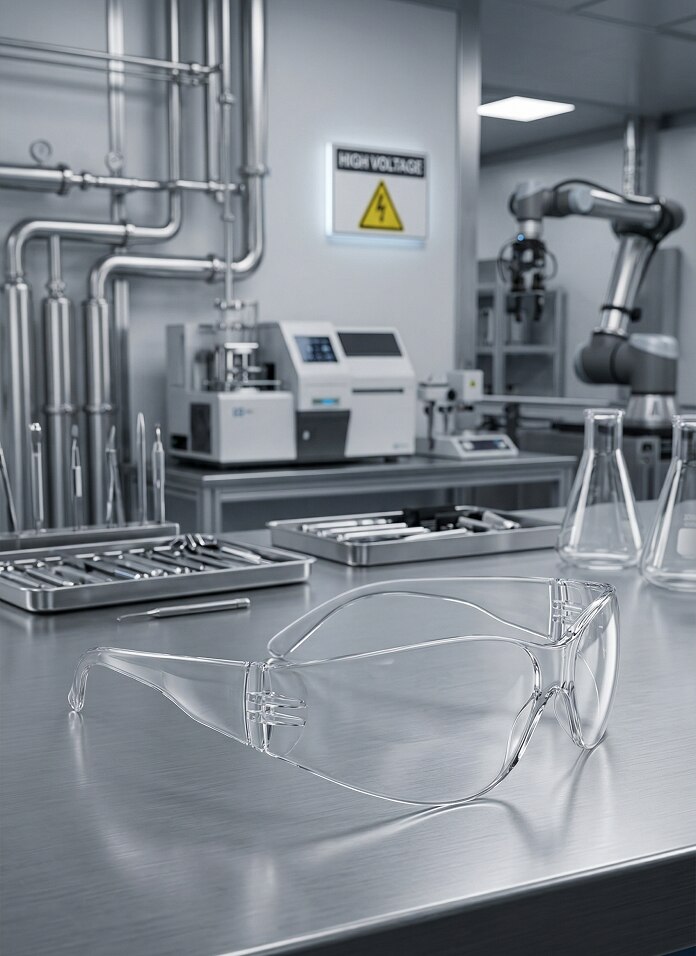 | Safety Goggles Honeywell A700-AF Safety Spectacles Premium Eye Protection by AI Sales Corporation, Pune Protect your eyes with the high-performance Honeywell A700-AF Safety Spectacles, designed for... View product → |
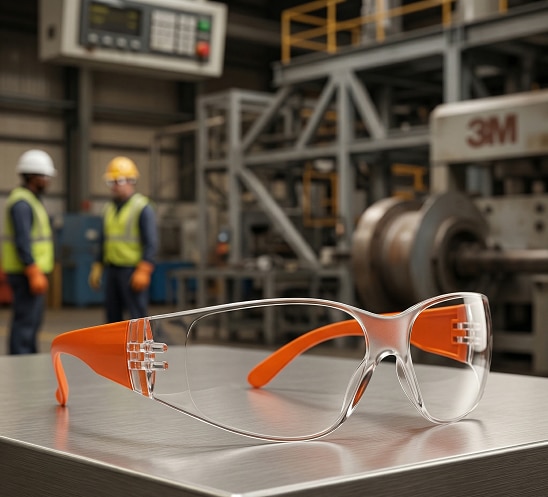 | Safety Goggles Advanced Eye Safety Solutions by AI Sales Corporation, Pune AI Sales Corporation, based in Pune, presents high-quality Virtual Protective Eyewear... View product → |
Frequently asked questions
Which safety belt or harness should a Pune workplace select?
Use a full-body harness with an energy-absorbing lanyard or self-retracting lifeline for fall arrest. A waist or body belt is not suitable for arresting a fall.
What must a fall-protection specification include?
State the work height, anchor point, connector type, required clearance, worker weight range, inspection interval, rescue method and applicable equipment standard.
What protection do Honeywell A700-AF spectacles provide?
Honeywell A700-AF spectacles provide protective eyewear for hazards covered by their actual lens and frame markings. Match those markings to the site risks instead of treating the product name as proof of every protection claim.
How should buyers verify Honeywell A700-AF spectacles before ordering?
Check the lens and frame markings, packaging, model reference, batch information, fit and seal. Trial the spectacles with helmets, respirators and other equipment used on site.
What should a Pune procurement request contain?
List quantities, sizes, delivery location, required markings, certificates, batch traceability, samples, replacement terms and inspection documents for each harness and spectacle model.
Keywords