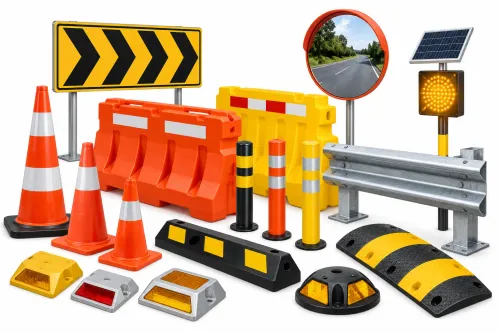



Traffic cones are familiar safety products, but their effectiveness depends on where they are used, how visible they are, how they are positioned, and whether their construction suits the environment. Organizations comparing Traffic Cone Suppliers in Pune should therefore evaluate application requirements before deciding on quantity or type.
Traffic cones can support temporary traffic control across construction zones, industrial premises, parking facilities, warehouses, maintenance areas, commercial properties, and infrastructure projects.
Determine the Application
Start by identifying what the cones need to accomplish.
Typical applications include:
- Redirecting vehicles
- Marking maintenance areas
- Creating temporary restricted zones
- Separating pedestrian paths
- Organizing parking
- Identifying hazards
- Supporting temporary work-zone layouts
The operating environment influences what product characteristics should be prioritized.
Consider Visibility
Traffic cones need to attract attention early enough for approaching drivers or equipment operators to react.
For applications involving poor lighting or nighttime activity, visibility becomes especially important. Reflective elements may be relevant depending on the intended use and site requirements.
Placement also matters. Even highly visible equipment can be ineffective when positioned too late, too close to a hazard, or in an unclear pattern.
Look at Stability
Industrial yards and outdoor work areas may expose cones to wind, passing vehicles, frequent repositioning, and rough surfaces.
A suitable base and stable construction can help keep cones positioned as intended. At the same time, products used for temporary work need to remain practical for employees to move and store.
Calculate Quantity From the Layout
Rather than estimating quantity arbitrarily, map the area first.
Identify the beginning of the controlled zone, vehicle approach direction, required separation distance, pedestrian routes, and end of the restricted area.
This provides a more realistic quantity estimate and helps prevent gaps in traffic guidance.
Inspect Cones Regularly
Cones should not remain in service indefinitely without inspection.
Look for physical damage, excessive fading, reduced visibility, unstable bases, or contamination that affects appearance. Equipment that can no longer communicate the intended warning clearly should be reviewed for replacement.
AI Sales Corporation supplies traffic-management and industrial safety products for organizations in Pune, Maharashtra. Buyers can discuss whether cones are intended for industrial premises, parking management, construction activity, or other traffic-control applications.
Traffic cones are simple devices, but successful traffic management depends on choosing suitable equipment and using it as part of a planned layout. Product selection, positioning, visibility, inspection, and maintenance should all be considered together.