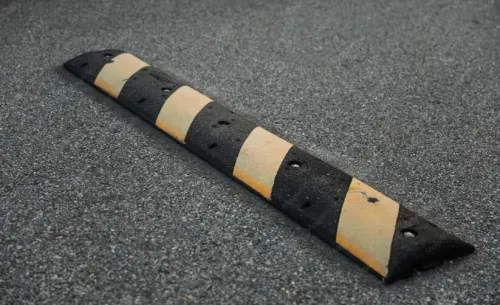
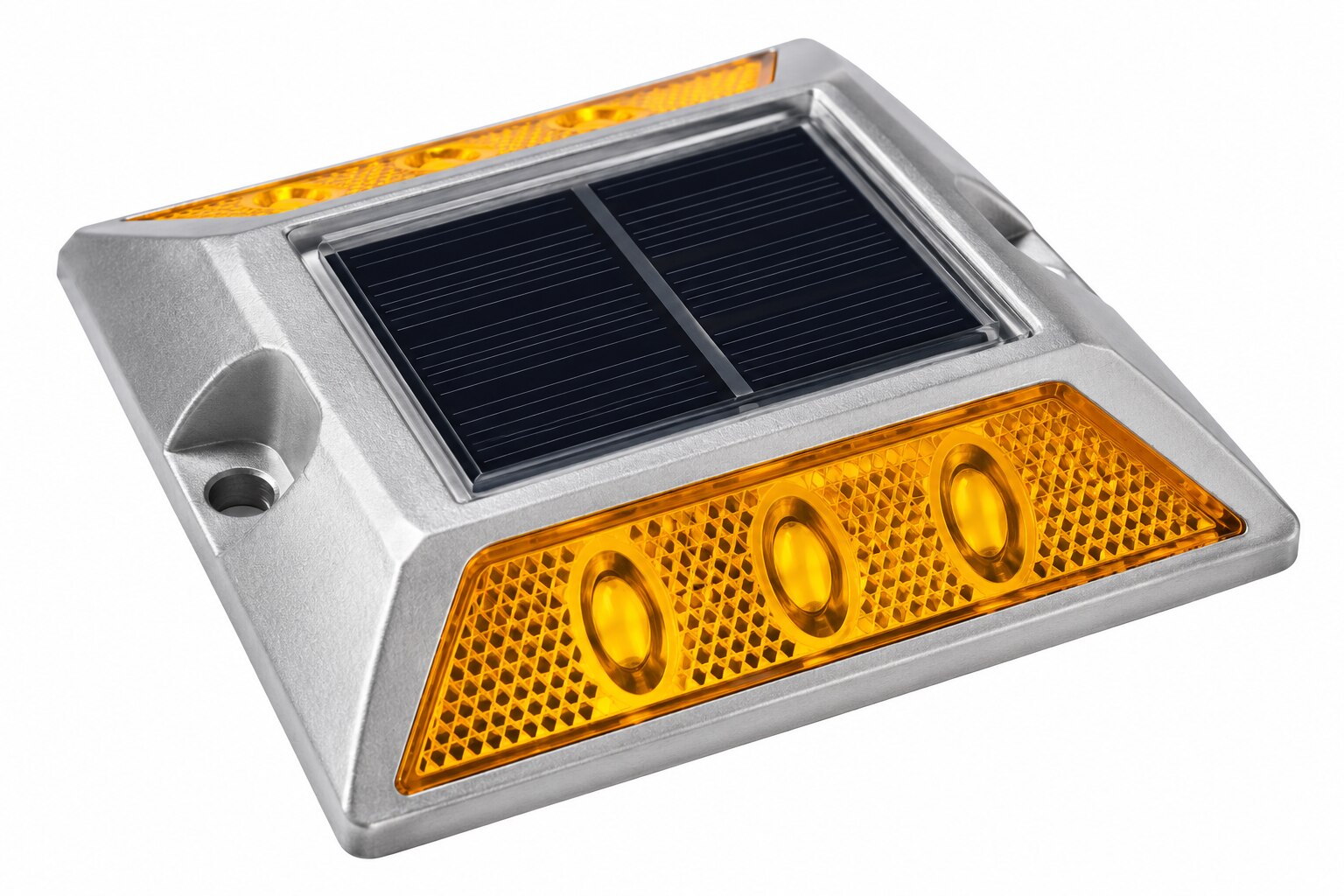
Road studs and anti-skid tape solve different hazards: one guides vehicle movement through point-based reflection or illumination, while the other adds friction and contrast across a surface. You will be able to decide whether to combine them, choose the correct mounting method and substrate, and reject a specification that lacks the evidence needed for Pune’s rain, dust, oil and truck traffic.
Key takeaways
- Use studs for visibility and tape for traction; they address different hazards.
- Design spacing, lanes and hazard zones before selecting products.
- Confirm whether AK976 uses adhesive, screws or another fixing method.
- Install only on clean, dry surfaces and inspect wear after traffic begins.
What each product does, and where the combination makes sense
A road stud and anti-skid tape solve different hazards, so Axnoy road studs with anti skid tape in Pune are complementary, not redundant. A stud provides raised-point delineation plus retroreflection or illumination for lane edges, curves, median noses, junction approaches, crossings, ramps and vehicle paths.
Tape provides continuous daytime contrast and wet or dry friction on steps, pedestrian ramps, loading-bay edges, walkways and narrow access routes. Tape cannot replace long-distance night guidance, while a stud cannot supply slip resistance across a walking surface.
Practical road stud applications include:
- Parking entrances and warehouse approaches, where studs reinforce the vehicle line and tape marks a pedestrian edge.
- Loading yards, ramps and speed humps, where drivers need point guidance but workers need continuous traction.
- Sharp bends, median noses and crossings, where retroreflection shows the route at night.
- Temporary roadwork zones, where studs may support vehicle-channel guidance but do not replace cones, barriers, signs or lamps.
Keep the stud beside the taped area or in a separate vehicle guidance line. Do not place tape over the reflector or wrap it around the raised body; the overlap can trap water, hinder sweeping and make the edge uneven.
A stud in a pedestrian route can cause trips, while one in a turning path can create tyre impact. Tape placed at a stud edge can lift under sweeping or vehicle shear.
Choose the layout before choosing the product
Place studs on the vehicle-path marking or edge, and reserve anti-skid tape for the pedestrian or equipment-contact hazard. Keep the reflector unobstructed and correctly oriented toward the driver approach; coordinate both layouts with pavement markings, not with the number of pieces in a carton.
| Surface | Preparation and decision |
|---|---|
| Concrete | Remove laitance, dust and loose material; use a sound, dry contact area. |
| Asphalt | Use sound pavement free of bitumen contamination; test adhesion before installation. |
| Painted flooring | Check adhesive compatibility on a sample, or the tape may lift paint. |
| Metal | Remove rust and oil; use the specified primer or mechanical fixing. |
| Paver blocks | Use a stable, consolidated contact area; mechanical fixing or another treatment may be necessary. |
| Dusty yards | Consolidate the surface before bonding; loose dust will defeat the adhesive. |
Do not use ordinary abrasive tape in heavy turning traffic where tyre shear, water ingress or sweeping can lift it. Choose a traffic-rated pavement treatment or mechanically fixed system instead.
Use cones, barriers, warning signs, lamps, reflective vests, speed control or a redesigned crossing when the real problem is poor drainage, unsafe geometry, inadequate lighting, missing separation or an active work zone. Roadwork visibility products provide warning and separation; studs and tape do not.
Neither product repairs worn or misplaced markings. They also do not replace compliant temporary traffic management, and a raised stud belongs nowhere that it creates a trip or tyre-impact hazard.
Confirm how the AK976 is fixed before ordering
Do not approve the Axnoy road stud AK976 in Pune from its model number. Confirm whether it is passive reflective, solar or LED, and whether it is rated for carriageway traffic. AI Sales Corporation can help place the supplier’s technical information beside the tape specification, but the datasheet must decide the application.
1. Request the stud’s dimensions, body material, reflector colour and type, visibility direction, load rating, impact resistance, water or IP rating, operating temperature and expected service life under vehicle traffic.
2. Confirm whether it uses adhesive, screws, recessed fixing or another method. Obtain the compatible adhesive, primer, drill or anchor tools, application temperature, cure time and required traffic closure. Ask for the datasheet, installation instructions, warranty terms and batch details when available.
3. Specify the anti skid tape in Pune in the same comparison: abrasive type and grade, total thickness, backing and adhesive, compatible substrate range, wet-slip performance, temperature range and expected exposure to pedestrians, vehicles, turning, water and sweeping.
4. Require a physical sample installation before ordering in volume. Test it after rain and representative traffic, checking bond or anchorage, reflector visibility from the approach, stud height, tape-edge retention and trip or tyre-impact risk.
Record the selected fixing method, adhesive, primer, substrate preparation and acceptance criteria in the work order. Reject the order if the supplier cannot provide these details or if the proposed fixing leaves too little flat surface for tape bonding.
Related products
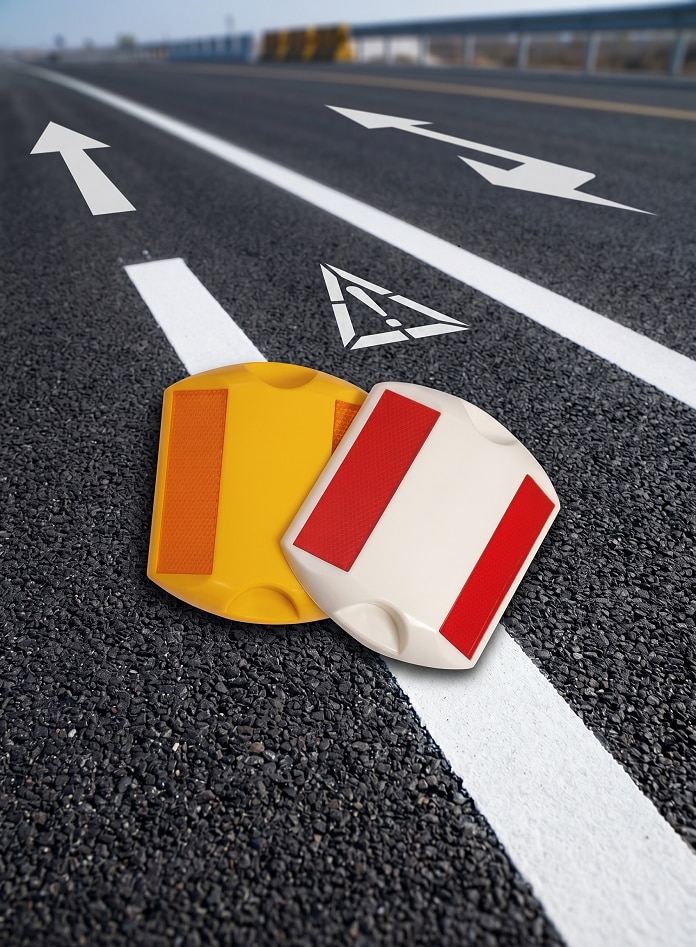 | Traffic Safety Equipments Premium Road Safety Solution in Pune AI Sales Corporation, Pune proudly offers the high-performance Axnoy Road Stud AK976, designed to enhance road... View product → |
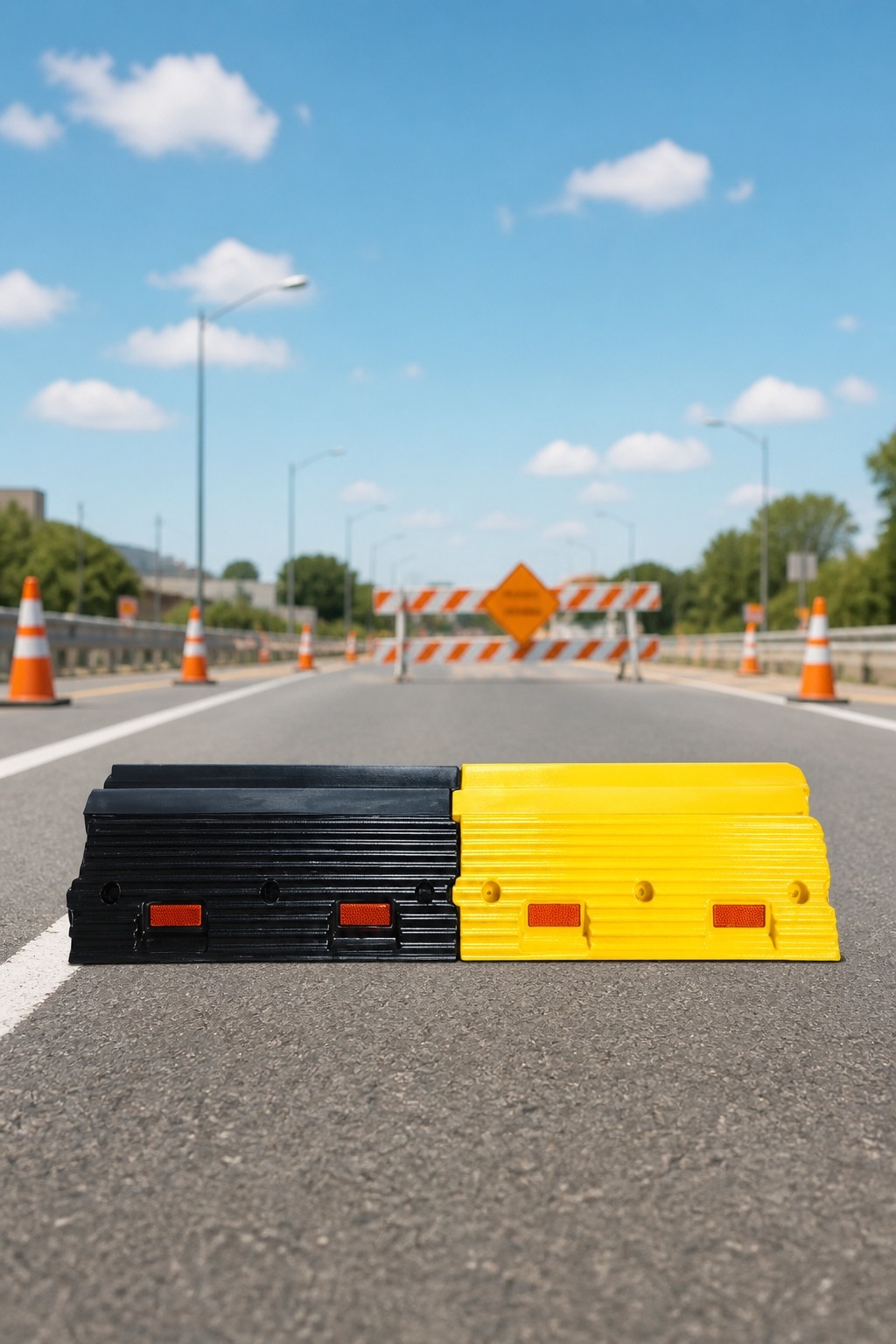 | Traffic Safety Equipments Durable Traffic Safety Solution in Pune AI Sales Corporation, Pune offers high-quality Plastic Speed Bumps AK1005, designed to effectively control... View product → |
Use a dry, controlled installation sequence in Pune
For axnoy road studs with anti skid tape in pune, begin with the approved road-marking and traffic path, not the carton layout. Keep the stud in the vehicle-guidance line and place anti-skid tape only on the separate pedestrian or equipment-contact hazard.
1. Mark the stud position and tape boundaries. Leave the reflector fully exposed, avoid wrapping tape around the raised body, and prevent a raised overlap that could trap water or catch a tyre or foot.
2. Prepare the pavement mechanically and chemically. Remove dust, concrete laitance, loose paint, mud, oil, bitumen splash and other weak material, then degrease and dry the contact area completely. Do not install anti skid tape in pune on damp, oily or actively wet pavement because a surface that looks clean can still cause bond failure.
3. Drill and anchor the stud when the approved method requires mechanical fixing. Otherwise, apply only the specified primer or adhesive to a sound, flat area beside the tape, following the product’s application-temperature and curing requirements.
4. Close the lane or walkway for the full cure period. Shield the work from monsoon rain, standing water, dust and vehicle movement; never shorten curing time to reopen a route.
5. Test a sample after rain and representative pedestrian or vehicle traffic. Check bond or anchorage, stud height, reflector visibility from the driver approach, tape-edge retention, and trip or tyre-impact risk before approving the full installation.
Maintain the combined treatment and judge whether it is working
Accept the treatment only when the marking remains accurate, the reflector is clear from the driver approach at night, the tape still grips footwear or tyres, and every edge remains bonded. A sample installation for the Axnoy Road Stud AK976 in Pune must pass inspection after rain and representative traffic before wider installation.
| Route | Routine inspection | Extra inspection |
|---|---|---|
| Truck yards | Weekly and after heavy turning or axle impact | After monsoon storms, flooding, sweeping or resurfacing |
| Ramps and crossings | Daily before use | After water ingress, repairs or abnormal tyre impact |
| Public approaches | Weekly, including a night approach check | After storms, flooding, resurfacing or roadwork changes |
- Check for loose or cracked studs, changed stud height, lifted tape edges, worn abrasive grit, muddy or blocked reflectors, paint or bitumen overspray, and standing water. A raised unit that catches a tyre or foot requires immediate isolation, not extra tape.
- Clean the optical face with clean water and a soft, non-abrasive cloth; do not scrape it with metal or abrasive pads.
- Replace a failed stud or tape section only after placing cones, barriers, warning signs and high-visibility clothing, then closing or diverting the affected path.
- Repeated truck turning, oil, dust, pedestrian traffic or substrate movement can defeat adhesive-only fixing. Choose a mechanically anchored or traffic-rated system when the duty cycle demands it.
- If visibility, friction, bonding or marking accuracy fails, change drainage, lighting, geometry, barriers or traffic control. More roadwork visibility products will not correct the wrong hazard.
Frequently asked questions
When do Axnoy road studs and anti-skid tape make sense together?
Use road studs for raised-point guidance and visibility, and anti-skid tape where vehicles or pedestrians need extra traction. The combination suits curves, ramps, junction approaches, crossings, median noses and defined vehicle paths.
What should you decide before choosing a road stud or anti-skid tape?
Choose the layout first: mark lane edges, stopping points, crossing lines, curves, ramps and hazard zones. Then select products that fit the traffic direction, surface and required visibility.
What must you confirm before ordering the Axnoy Road Stud AK976 in Pune?
Ask how the AK976 is fixed to the surface, including whether it requires adhesive, screws, drilled holes or another method. Confirm surface compatibility, installation tools and any curing or traffic-exclusion time.
How do you install the combined treatment in Pune?
Work on a clean, dry, controlled surface. Remove dust, oil and loose material, follow the product preparation instructions, place the layout accurately, and keep traffic away until the fixing and tape bond are ready.
How can you tell whether the combined treatment is working?
Inspect studs for looseness, impact damage and lost reflectivity, and inspect tape for lifting, contamination and wear. Compare night visibility, vehicle path compliance, braking behaviour and reported slips before and after installation.
Related product
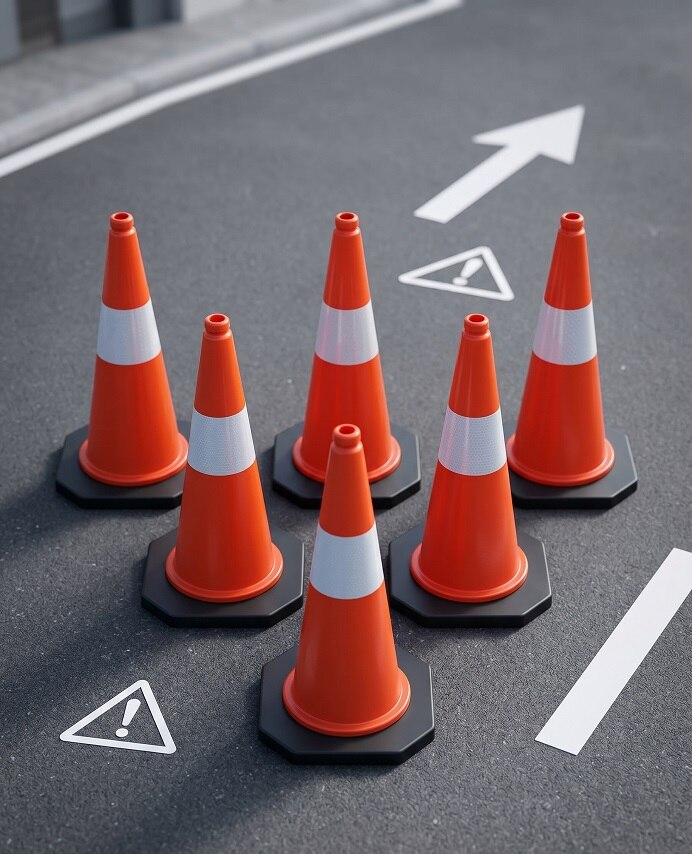 | Traffic Safety Equipments Traffic Cone (1000mm) with Reflective Sleeve AI Sales Corporation, Pune AI Sales Corporation, based in Pune, Maharashtra, offers high-quality 1000mm Traffic Cones with Reflective Sleeve,... View product → |
Keywords